RIRS Laser Surgery for Kidney Stones in Shahdara
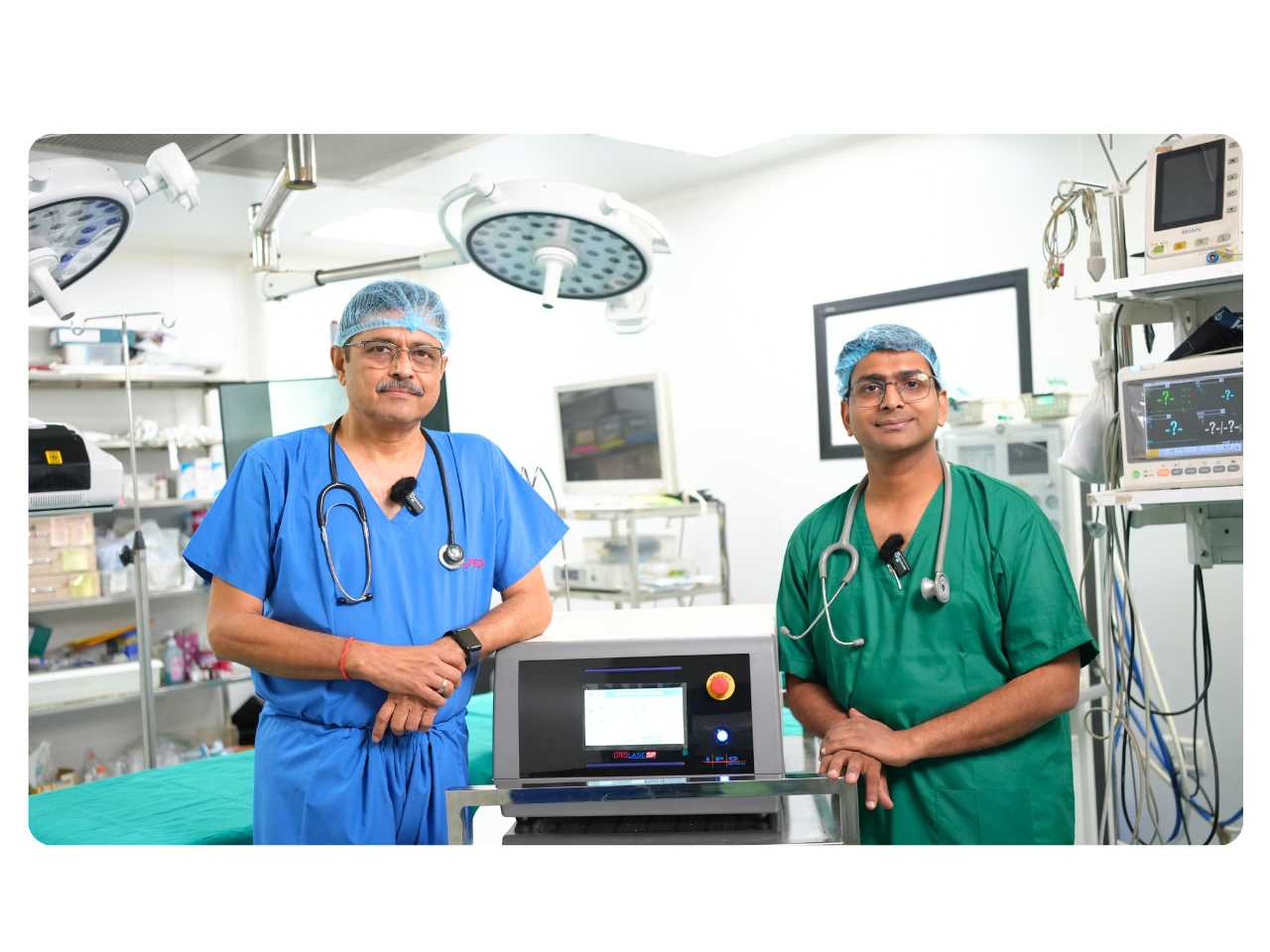
Retrograde Intrarenal Surgery (RIRS) is an advanced, minimally invasive procedure used to treat kidney stones without any external incision. At East Delhi Medical Centre (EDMC), RIRS surgery is performed using state-of-the-art flexible ureteroscopes and laser technology, enabling precise stone fragmentation with minimal pain, quicker recovery, and reduced hospital stay. The procedure is performed under the care of Dr. Piyush Gupta, an experienced consultant known for managing complex kidney stone cases with a patient-centric approach. With modern infrastructure, advanced surgical protocols, and trusted clinical expertise, EDMC offers safe and effective RIRS surgery for kidney stone patients across East Delhi.
RIRS Operation : Cutting-Edge Thulium Laser Technology For Painless Kidney Stone Removal
East Delhi Medical Centre introduces one of the most advanced kidney stone removal options in East Delhi– Thulium laser surgery – the latest advancement in kidney stone treatment. This state-of-the-art procedure offers a safe, highly effective, and minimally invasive solution for patients seeking relief from kidney stones.
- Precision targeting: Thulium laser’s unique wavelength allows for accurate stone fragmentation
- Minimal thermal damage: Gentler on surrounding tissues compared to other lasers
- Faster procedure time: Efficient stone dusting and fragmentation
- Versatility: Effective on all types of kidney stones, including harder compositions
- Reduced risk of complications: Higher safety profile than traditional methods
How Does Thulium Laser Kidney Stone Surgery Work?
- Insertion of a thin flexible ureteroscope through the urinary tract
- Precise location of the kidney stone using high-definition imaging
- Application of the thulium laser to break down the stone into fine dust or tiny fragments
- Natural passage of stone dust or fragments through urine
Thulium Laser vs. Other Kidney Stone Removal Techniques
How does Thulium Laser method compare to other methods?
- Superior to shock wave lithotripsy: More effective for larger or harder stones
- No incisions: Unlike percutaneous nephrolithotomy, reducing infection risk
- Hospital Stay: Shorter hospital stay compared to traditional surgery
- Quicker recovery: Faster return to normal activities
What is RIRS surgery and how is it different from URSL for kidney stones?
RIRS, or Retrograde Intrarenal Surgery, is a minimally invasive procedure used to treat kidney stones that are located inside the kidney itself. The surgery is performed using a flexible ureteroscope that is passed through the natural urinary passage, reaching deep into the kidney without any incision on the body. A laser is then used to break the stone into very small fragments.
URSL, or Ureteroscopic Lithotripsy, on the other hand, is mainly used for stones that are located in the ureter, the tube that carries urine from the kidney to the bladder. While both procedures use similar endoscopic and laser technology, the key difference lies in the location of the stone and the type of scope used. RIRS requires a highly flexible instrument to navigate the internal chambers of the kidney, whereas URSL is generally limited to stones that are lower down in the urinary tract.
In simple terms, URSL is usually chosen for ureteric stones, while RIRS is preferred when stones are located within the kidney or in areas that are difficult to access with rigid instruments.
Is RIRS surgery painful and how long does recovery take?
RIRS is comparatively easier for patients because it does not involve any cuts or incisions. The procedure is performed under anesthesia, so patients do not experience pain during surgery. After the procedure, mild discomfort during urination, a sensation of urgency, or lower abdominal discomfort may occur for a short period.
Most patients are able to resume light daily activities within a few days. Hospital stay is usually brief, and recovery is significantly faster compared to more invasive kidney stone surgeries. If a temporary stent is placed, some urinary discomfort may persist until it is removed, which is a routine part of post-operative care.
With proper hydration, medications, and follow-up, recovery after RIRS is typically smooth and uncomplicated.
Can kidney stones come back after RIRS surgery?
RIRS successfully removes existing kidney stones, but it does not change the underlying tendency of the body to form stones. This means that recurrence is possible, especially if preventive measures are not followed. Factors such as low water intake, dietary habits, metabolic conditions, and family history can all contribute to stone formation.
After RIRS, patients are usually advised on lifestyle and dietary modifications to reduce future risk. In some cases, further evaluation may be recommended to identify metabolic causes of recurrent stones. Regular follow-ups help monitor kidney health and detect any new stone formation at an early stage.
Managing kidney stones effectively is not just about removing the stone but also about preventing the next one. This long-term approach is an important part of post-RIRS care.
What is the success rate of RIRS for kidney stone removal?
RIRS has shown high success rates in clearing kidney stones, particularly when the stones are appropriately selected for this technique. In many cases, patients achieve complete or near-complete stone clearance after the procedure. However, outcomes can vary depending on factors such as stone size, number of stones, and their exact position within the kidney.
For larger or multiple stones, the procedure may sometimes be planned in stages to achieve optimal clearance while maintaining safety. This approach helps reduce stress on the kidney and improves overall results.
Rather than promising absolute clearance in every case, experienced centres focus on achieving the safest and most effective outcome for each patient. Follow-up imaging is usually done to assess results and guide any further management if required.
That persistent, burning sensation in your chest after meals, often dismissed as simple "heartburn," might be a sign of Gastroesophageal Reflux Disease (GERD). Think of the valve between your esophagus and stomach as a tightly sealed door. In GERD, this door (the lower esophageal sphincter) weakens or relaxes when it shouldn't, allowing stomach acid to flow back up into the esophagus. This isn't just uncomfortable; over time, this acid can damage the esophageal lining. At East Delhi Medical Centre, our first step is to help you understand that GERD is a manageable medical condition, not just a lifestyle inconvenience.
Recognizing the full range of symptoms is key to getting the right help. While the classic sign is heartburn, GERD can also manifest as regurgitation (the feeling of acid backing up into your throat), difficulty swallowing, a chronic dry cough (especially at night), or hoarseness in the morning. Our gastroenterologists in Shahdara are skilled at looking beyond the obvious symptoms to get a complete picture of your health. A proper diagnosis, sometimes involving a simple procedure like an Upper GI Endoscopy, allows us to create a targeted treatment plan that not only relieves your discomfort but also protects your long-term health.
A peptic ulcer is not just a result of stress, it is a physical sore that develops on the lining of your stomach or the upper part of your small intestine.
The most common causes are a bacterial infection known as Helicobacter pylori (H. pylori)and the long-term use of certain anti-inflammatory drugs. (Consult with your doctor if the symptoms matche and you have a long prescription of anti-inflammatory drugs.)
The primary symptom is a gnawing or burning stomach pain that can sometimes be temporarily relieved by eating or taking antacids. Other signs include feeling full quickly, bloating, and persistent nausea. Ignoring these symptoms can lead to serious complications.
Our approach at East Delhi Medical Centre is to identify the root cause of your ulcer. Through specific tests, we can determine if an H. pylori infection is present and treat it effectively with a targeted course of antibiotics and acid-reducing medications. For ulcers caused by medication, we work with you to find alternatives and develop a plan to help your stomach lining heal. Our goal is to eradicate the underlying problem, not just manage the symptoms, to prevent recurrence and ensure your digestive comfort.
Irritable Bowel Syndrome (IBS) is one of the most common, and often frustrating, digestive disorders. It's considered a "functional" disorder, meaning there's no visible damage to the digestive tract, but the gut's normal function is disrupted. This results in a highly variable set of symptoms, including abdominal cramping, bloating, gas, and alternating periods of diarrhea and constipation. For many living in our busy East Delhi communities, the unpredictability of IBS can cause significant stress and affect their quality of life.
There is no one-size-fits-all cure for IBS, which is why a personalized management plan from an experienced gastroenterologist is so important. At EDMC, our specialists work closely with you to identify your specific triggers, which can include certain foods, stress, or hormonal changes. We focus on creating a comprehensive strategy that combines dietary adjustments, stress management techniques, and, when necessary, specific medications to regulate bowel function and reduce discomfort. Our aim is to empower you with the tools and support to manage your IBS effectively.
Unlike IBS, Inflammatory Bowel Disease (IBD) involves chronic inflammation and physical damage to the digestive tract. The two main forms are Crohn's Disease and Ulcerative Colitis. These are serious autoimmune conditions that can cause debilitating symptoms, including severe diarrhea, abdominal pain, rectal bleeding, weight loss, and fatigue. Managing IBD requires specialized, long-term medical care from a gastroenterologist to control inflammation, manage symptoms, and reduce the risk of complications.
Our team at East Delhi Medical Centre is experienced in diagnosing and managing both Crohn's Disease and Ulcerative Colitis. An accurate diagnosis is critical and is typically confirmed through procedures like a colonoscopy with biopsies. Treatment is highly personalized and focuses on inducing and maintaining remission. This involves advanced medications designed to reduce inflammation in the gut, along with nutritional support and regular monitoring to track your progress and adjust the treatment plan as needed. We are committed to being your long-term health partner in managing this chronic condition.
Gastritis is the medical term for inflammation of the stomach lining, a condition that many people in Delhi experience due to diet, stress, or infection. This inflammation can cause a persistent nagging or burning ache in the upper abdomen, often accompanied by nausea, bloating, and a distinct feeling of fullness after eating only a small amount. While over-the-counter antacids might offer temporary relief, they don't address the underlying cause, which could be a bacterial infection like H. pylori, long-term use of certain painkillers, or chronic stress. Ignoring gastritis can lead to more significant issues like stomach ulcers.
Finding the root cause of your discomfort is the primary goal of a gastroenterologist in East Delhi. At East Delhi Medical Centre, we don't just mask the symptoms; we investigate the reason behind the inflammation. A definitive diagnosis may involve an Upper GI Endoscopy, a simple procedure that allows our specialists to view the stomach lining directly and test for H. Pylori. Based on the findings, our stomach specialists create a targeted treatment plan, which may include medications to reduce stomach acid, antibiotics to clear an infection, and practical dietary advice to help your stomach lining heal and prevent future flare-ups.
Chronic Indigestion is a term many use to describe a collection of uncomfortable symptoms centered in the upper abdomen. Medically known as Dyspepsia, it's not a disease itself but a sign that your digestive process isn't working as it should. If you frequently suffer from upper abdominal pain, persistent bloating, excessive belching, or feeling full very quicklyafter starting a meal, you're likely experiencing chronic dyspepsia. While occasional indigestion is normal, when these symptoms become a regular part of your life, it's a signal to seek a professional evaluation to rule out any underlying conditions.
The most important step in managing dyspepsia is getting an accurate diagnosis. A skilled gastroenterologist will work to determine if your symptoms are caused by a specific condition like GERD, ulcers, or gastritis, or if it is "functional dyspepsia," where no obvious cause is found. At East Delhi Medical Centre, your consultation will involve a detailed discussion of your symptoms and lifestyle. If necessary, our doctors may recommend further tests to ensure a precise diagnosis. Our aim is to provide you with a clear answer and an effective management plan to bring you lasting relief.
East Delhi Medical Centre
East Delhi Medical Centre, Main GT Road, Mansarovar Park, Shahdara, New Delhi, Delhi 110032
Mailing Address
info@edmc.in
eastdelhimedical@gmail.com
Call us Anytime!
94 1045 1045
94 1046 1046