
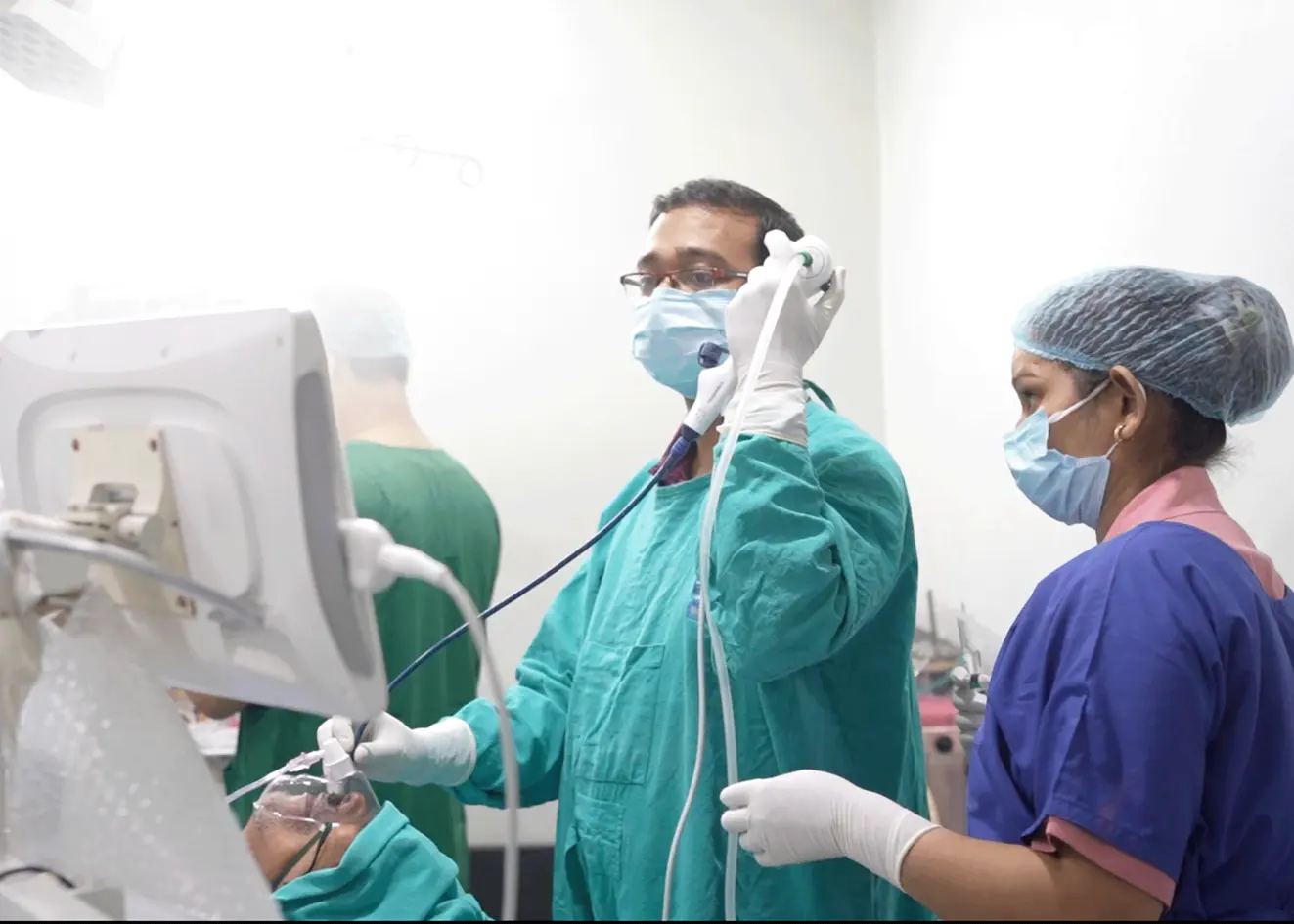
A bronchoscopy test is a specialised procedure that allows your pulmonologist to examine the inside of your airways and lungs using a thin, flexible tube with a tiny camera. It is commonly recommended when symptoms such as a persistent cough, coughing up blood, recurrent chest infections, unexplained breathing difficulty, or an abnormal chest X-ray or CT scan require further evaluation. Unlike imaging tests, a bronchoscopy procedure allows the doctor to directly examine the airways and, when necessary, collect tissue or fluid samples for further testing.
At East Delhi Medical Centre, flexible bronchoscopy is performed by experienced chest physicians in a controlled clinical setting. The procedure helps diagnose a wide range of respiratory conditions, including lung infections, airway inflammation, tuberculosis, lung nodules, and other abnormalities affecting the bronchial tubes. If your doctor has advised a bronchoscopy test, our team will guide you through every step of the procedure, explain the preparation, and ensure you are comfortable throughout the examination.
When Do You Need a Bronchoscopy?
A bronchoscopy test is usually recommended when symptoms continue despite treatment or when an X-ray or CT scan shows an abnormal finding that needs a closer look. While imaging tests can identify changes in the lungs, they cannot always explain the exact cause. A bronchoscopy procedure allows your pulmonologist to examine the airways directly, collect samples when required, and reach a more accurate diagnosis.
Not everyone with a cough or chest infection needs a bronchoscopy. The procedure is advised only when your doctor believes that looking inside the airways will provide information that cannot be obtained through routine blood tests or imaging alone.
Persistent Cough That Doesn't Improve
A cough lasting several weeks should not always be dismissed as a seasonal infection. If medicines have not helped, or if the cough keeps returning, your doctor may advise a bronchoscopy test to examine the airways for infection, inflammation, narrowing, foreign bodies, or other underlying conditions.
Persistent cough is one of the most common reasons patients are referred for a flexible bronchoscopy, particularly when the cause remains unclear after routine investigations.
Blood in Sputum Should Never Be Ignored
Even a small amount of blood while coughing can be alarming. Sometimes the cause is a chest infection or inflamed airways. In other situations, further evaluation is necessary to identify the source of bleeding.
A bronchoscopy procedure allows your doctor to examine the bronchial tubes, identify the area of bleeding, and decide whether further treatment or a bronchoscopy biopsy is required.
When Chest Infections Keep Coming Back
Repeated chest infections, pneumonia affecting the same part of the lung, or infections that do not improve despite antibiotics often require further evaluation. A bronchoscopy test helps your doctor look for blocked airways, mucus plugs, unusual infections, or structural abnormalities that may be contributing to the problem.
During the procedure, small samples of mucus or fluid can also be collected and sent for laboratory testing to identify the exact organism causing the infection.
Abnormal Chest X-ray or CT Scan
Sometimes patients feel perfectly well, yet a routine chest X-ray or CT scan reveals an unexpected abnormality. This may include a lung nodule, persistent lung collapse, enlarged airways, or an unexplained shadow.
In these situations, a bronchoscopy helps the pulmonologist examine the affected area more closely. If required, tissue samples can be collected during the same procedure for further laboratory analysis.
Conditions That May Require a Bronchoscopy
Your pulmonologist may recommend a bronchoscopy test to investigate:
Persistent cough lasting several weeks
Coughing up blood (Haemoptysis)
Recurrent chest infections
Tuberculosis requiring further evaluation
Abnormal chest X-ray findings
Abnormal CT scan of the lungs
Lung nodules
Airway narrowing or blockage
Suspected foreign body in the airway
Persistent wheezing without a clear cause
Unexplained breathing difficulty
Lung infections that do not respond to treatment
More Than a Diagnostic Test
A bronchoscopy procedure is not only used to diagnose disease. In selected situations, it also helps doctors collect tissue samples, remove mucus plugs, retrieve an inhaled foreign body, or obtain specimens for specialised laboratory testing. Because the examination provides a direct view of the airways, it often answers questions that cannot be resolved through scans alone and helps your pulmonologist plan the most appropriate treatment.
Preparing for a Bronchoscopy: What to Expect Before, During and After the Procedure
If your doctor has advised a bronchoscopy, it is natural to have questions about the procedure. Most patients want to know whether they need to fast, how long the test takes, whether a biopsy will be performed, and how soon they can return home. Knowing what to expect often makes the experience much more comfortable.
Before the bronchoscopy procedure, your pulmonologist will review your symptoms, previous investigations, medicines, and medical history. If you are taking blood thinners, diabetes medication, or medicines for heart disease, your doctor may advise temporary changes before the test. Since a bronchoscopy is usually performed under local anaesthesia with sedation, you will also receive instructions about fasting before your appointment.
Before Your Bronchoscopy Appointment
To help your bronchoscopy procedure go smoothly, your healthcare team may advise you to:
Avoid eating or drinking for the recommended fasting period.
Inform your doctor about all medicines you are currently taking.
Share any history of allergies or reactions to anaesthesia or sedation.
Carry your previous chest X-rays, CT scans, bronchoscopy reports, and blood test results.
Arrange for a family member or friend to accompany you home if sedation has been used.
Following these instructions helps your doctor perform a safe and accurate examination of your airways and lungs.
Can a Biopsy Be Performed During Bronchoscopy?
Yes. If your pulmonologist notices an abnormal area inside the airways, a bronchoscopy biopsy may be performed during the same procedure. A tiny tissue sample can be collected for laboratory examination without the need for another procedure.
A bronchoscopy biopsy is commonly recommended when evaluating lung nodules, persistent lung infections, abnormal growths, suspected tuberculosis, unexplained shadows on a CT scan, or other conditions where a tissue diagnosis is needed. Depending on your condition, your doctor may also collect mucus or fluid samples for microbiological testing.
Recovery After a Bronchoscopy
Most patients remain under observation for a short period after the bronchoscopy test. If sedation has been given, you may feel sleepy for a few hours and should avoid driving for the rest of the day. Mild throat irritation or a temporary cough can occur after the procedure and usually settles without treatment.
Your doctor will explain the initial findings before discharge. If tissue samples or a lung biopsy have been sent for laboratory testing, a follow-up appointment will be arranged to discuss the reports and the next steps in your treatment.
Patients from Shahdara, Dilshad Garden, Mansarovar Park, Vivek Vihar and nearby areas of East Delhi often undergo bronchoscopy after being referred by their pulmonologist for persistent respiratory symptoms or abnormal chest imaging. If you have been advised a bronchoscopy test, understanding the procedure beforehand can help you feel more prepared and confident on the day of your appointment.
Book an Appointment now
24 x 7 Helpline | Walk in Diagnostics
Shahdara's Own Advanced Surgery Centre | Make an Appointment.